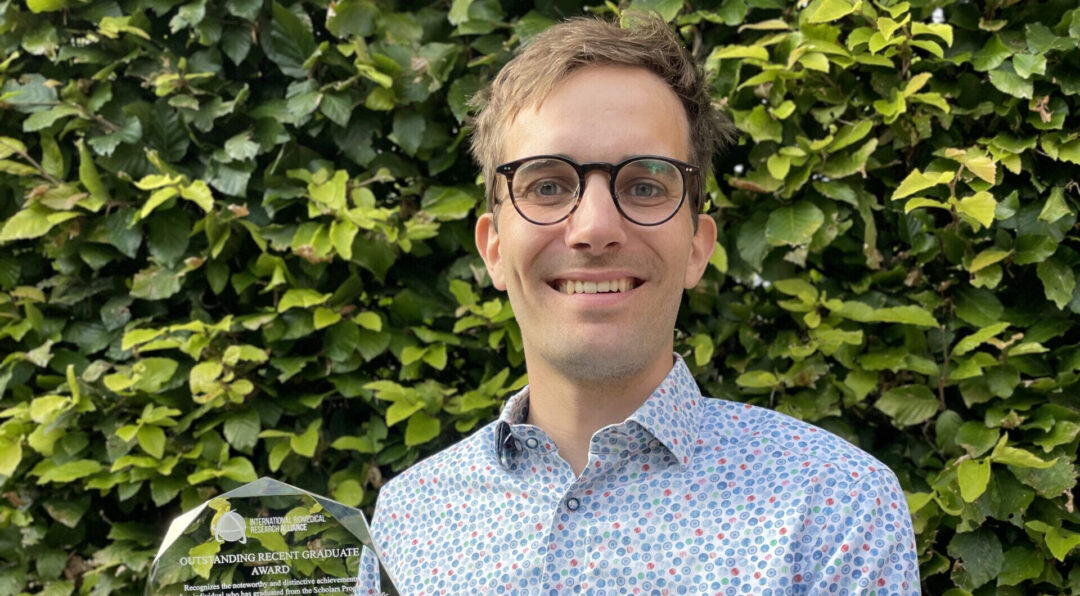
The International Biomedical Research Alliance’s Outstanding Recent Graduate Award was created to recognize the noteworthy and distinctive achievements of an individual who has graduated from the NIH Oxford-Cambridge Scholars Program within the last two years. The honoree embodies the values of scientific innovation and collaboration leading to seminal biomedical discoveries at an early stage in their career. This year, the Outstanding Recent Graduate Award was bestowed upon Dr. Kristoffer Haurum Johansen.
Kristoffer Haurum Johansen was a Wellcome Trust-NIH-Cambridge PhD Scholar in the Class of 2017, with mentors Dr. Pam Schwartzberg at the National Institute of Allergy and Infectious Disease and Professor Klaus Okkenhaug at the University of Cambridge.
Kristoffer has been an exemplar, both in tackling the challenges of working across two labs on two continents and more importantly, taking full advantage of the benefits the NIH OxCam Scholars Program offers.
Kristoffer designed a CRISPR screen that targets all known and suspected PIP3-binding proteins in the genome, with one of the key target genes identified being RASA3. These are potential effectors of the PI3K pathway which not only is essential for normal immune function but also among the most frequently activated in cancer and metabolic processes. RASA3 is unique among known PIP3 effectors to be negatively regulated by PI3K. Through his PhD, he mastered techniques including bioinformatics, molecular biology, gene-editing, in vivo infection and immunization models, imaging, flow cytometry, and biochemistry. Kristoffer published his work reporting the CRISPR screen and RASA3 phenotyping in Science Signaling which was featured on the cover and was highlighted by Science. Based on his work he has won a prestigious Fellowship from the Danish Lundbeckfonden where he will apply the techniques, he learned during his PhD to engineer more effective T cells to fight cancer.
“I have had the pleasure of visiting Kristoffer’s lab in Denmark and am delighted to see him developing a career as a leading innovative and independent researcher with great support from his current mentor, Sine Reker Hadrup, a world leader in the analysis of the TCR repertoires of tumour reactive T cells. Kristoffer brought CRISPR technology to the lab and is devising very clever methods for CRISPR screening and to modify T cells for adoptive cell therapy,” remarked Prof Klaus Okkenhaug.
“Throughout his work, it was a pleasure to watch Kristoffer grow as a scientist. He is bright, hardworking, independent, and creative and thinks deeply about his work and that of others. His work has wide-ranging implications for understanding immune cell trafficking in response to immunization, infection, and cancer. Finally, I would like to comment that Kristoffer is truly a delight to work with—friendly, helpful, generous, and conscientious, with high standards. I have had multiple outstanding students in my laboratory, including Jay Debnath, now chair of Pathology at UCSF; Edward M. Schaeffer now chair of Urology at Northwestern and more recently Roseanne Zhao, now a fellow in Mike Diamond’s lab. Kris is among the best of them. It is a pleasure and an honor to have worked with him, and both Klaus Okkenhaug and I highly recommend him for this award,” stated Dr. Pam Schwartzberg.
On being honored with this award Dr. Johansen remarked “I am deeply humbled and honored to receive this award and would like to express my gratitude to the International Biomedical Research Alliance for supporting the programme. My PhD studies were greatly enriched by new friendships with my fellow students, each of whom has contributed exceptional work in their respective fields. Lastly, I would like to give a heartfelt thank you to my fantastic supervisors, Professor Klaus Okkenhaug, and Dr. Pamela L. Schwartzberg, who have supported me immensely on this journey.”
Congratulations Kristoffer!
Commencing in 2020, The International Biomedical Research Alliance introduced a service recognition award to honor Scholars in the NIH Oxford-Cambridge/Wellcome Trust Scholars Program who demonstrate exceptional community service. Awardees are nominated by their peers to be recognized for their exceptional service, not only to the Scholars Program but also to the greater NIH and University communities. It is an honor to be recognized, but especially notable when the recognition comes from peers who have a unique and focused view of the awardees and their efforts.
The Building a Better Community Through Service Award recognizes a Scholar for their outstanding service to the community. The Award honors an individual who continuously places significant importance on the well-being of their community. Committed to social responsibility, they invest their time and talent to elevate and inspire others and, in doing so, uplift the community as a whole.
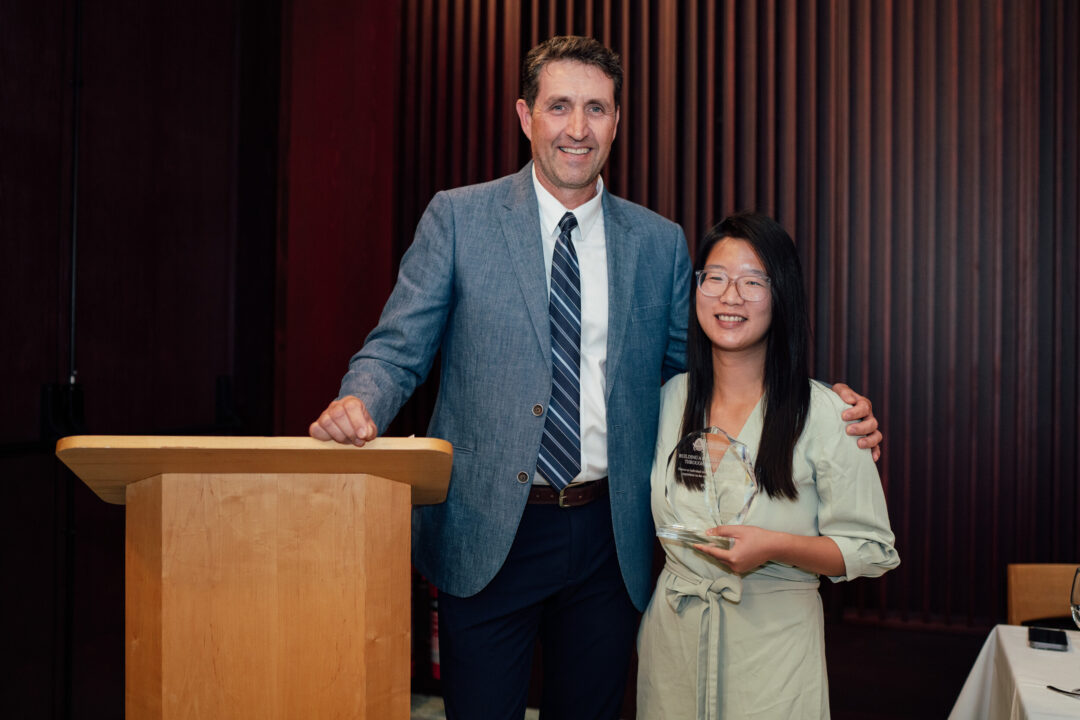
The “Building a Better Community Through Service Award” was bestowed upon Linh Pham and presented by outgoing Scientific Director Dr. Iain Fraser.
Linh Pham is an NIH-Oxford MD/DPhil Scholar in the Class of 2022. Her mentors are Dr. Armin Raznahan at the National Institute of Mental Health and Professor Jason Lerch at the University of Oxford. Linh was nominated by two of her peers separately. One nominator shared “In her short time as the Oxford Rep, the community has undergone a social revival that it hasn’t been able to have during the pandemic. She’s a diligent leader in her organizational skills which balances with her warm-hearted nature that welcomes both old and new OxCam students. Under her leadership, we now have regular social events that were missing before and her ability to encourage attendance has made the group of students in Oxford feel more like a community.
“I am very grateful that my peers nominated me. I also want to thank the IBRA for giving me this award and sponsoring our social initiatives this year. We all live far away from our support systems while studying in Oxford, so it has truly been my honor and joy to work with OxCam friends in creating the sense of ‘home away from home’. The most wonderful thing I learned from serving in this position is that OxCam students have such immense talents and diverse interests outside of academics. I look forward to seeing IBRA helping the next Oxford rep bring in new, vibrant colors to our social scene with their interests, talents, and perspective on what is beautiful, weird, and unique about Oxford and the UK,” shared Linh.
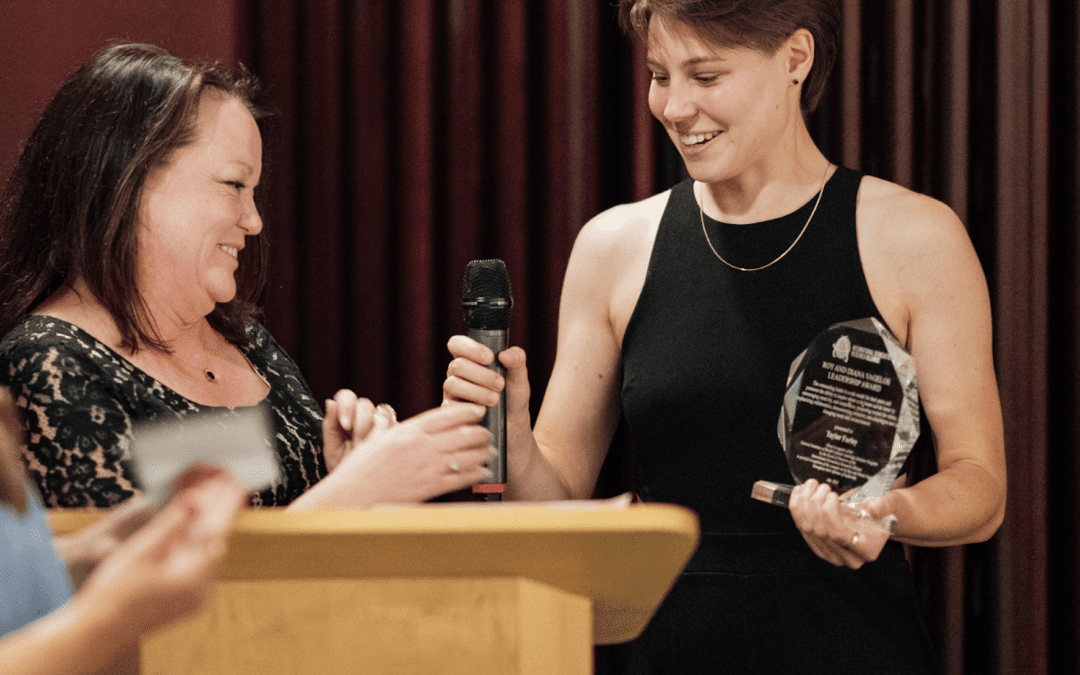
The recipient of the Roy and Diana Vagelos Leadership Award is a role model for their peers and possesses the ability to inspire others to be better and do better by encouraging creativity, and cooperation, promoting respect for others, emphasizing collaboration, demonstrating initiative, and adapting to new and changing needs and circumstances. This outstanding leader has a keen sense of organization and embodies leadership in all that they endeavor, combining clarity in thought with humility of character. Scholars in the NIH Oxford-Cambridge/Wellcome Trust Scholars Program who demonstrate exceptional leadership are nominated by their peers making this award a particularly special honor to receive. Dr. Sonja Best presented this award to NIH-Oxford Ph.D. Scholar Taylor Farley.
Taylor Farley is an NIH-Oxford DPhil Scholar in the Class of 2018. Her mentors are Dr. Yasmine Belkaid at the National Institute for Allergy and Infectious Disease and Professor Fiona Powrie at the University of Oxford. Taylor’s peers shared that she epitomizes what it means to be a ‘leader.’ Taylor has the unique ability to command a room and inspire those around her with a rare combination of empathy and strength.
Taylor’s leadership transformed the Student Leadership Board from a more of a conduit of information into the remarkable advocate for student affairs that it currently is today. She is both admired and appreciated by her peers and the greater NIH OxCam community for her dedication to leadership. We cannot wait to see how Taylor shines as a leader throughout her career.
“It is an honor to receive this award, I am thankful to the Alliance, and to my peers for the nomination. I also wish to highlight that this award is accepted in solidarity with all the members of the Student Leadership Board who advocated for and drove change within the program over my tenure. It was and will continue to be a team effort, and I am endlessly thankful to my peers for their shared dedication and bright ideas that have laid the groundwork for future Boards to build from. Next up for me, I will spend a bit more time at the NIH for a short post-doc to finish up my project and am currently investigating where I can best apply my penchant for advocacy and passion for science moving forward.”
Congratulations Taylor!
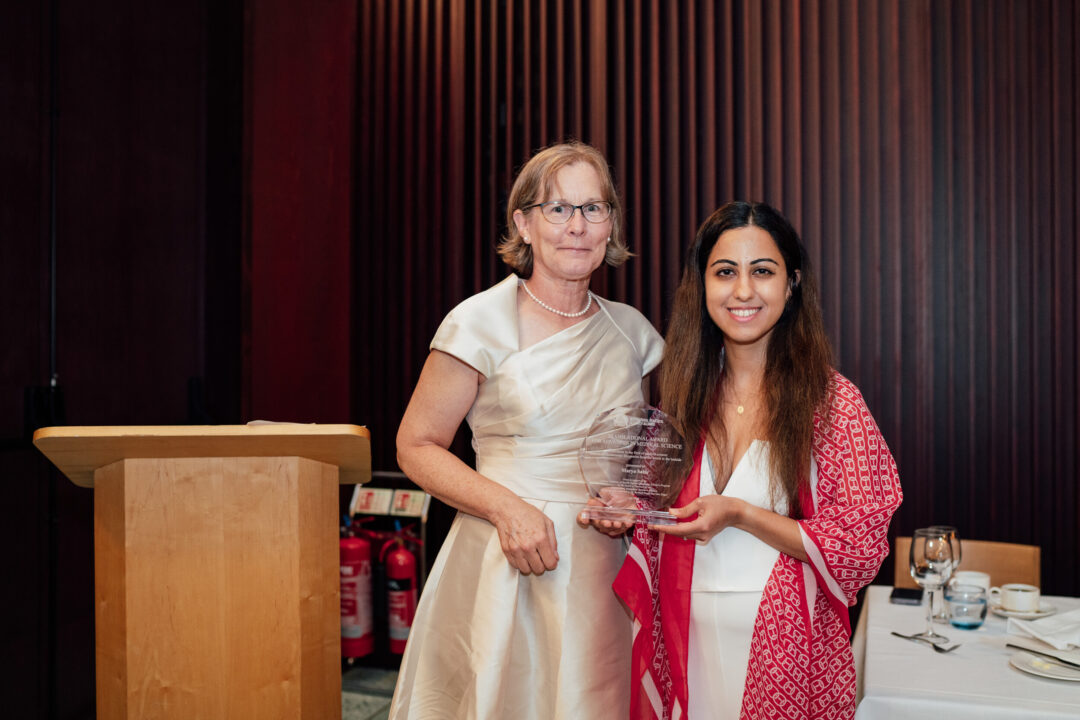
First awarded in 2016, the Dr. Richard and Vera Siegel Translational Award was generously endowed by NIH M.D./Ph.D. Partnership Program co-founder, Dr. Richard Siegel, and his wife, Vera. This annual award recognizes advances in the field of medical science that move fundamental discoveries from the bench to the bedside. This year, incoming NIH OxCam Scholars Program Scientific Co-Director, Dr. Mary Dasso, presented the award to the Class of 2019 Ph.D. Scholar Marya Sabir.
Marya Sabir is mentored by Dr. William Gahl at the National Human Genome Research Institute and Professor Frances Platt at the University of Oxford. Marya played a major leadership role in the investigation of a very rare, neurodegenerative disease called free sialic acid storage disease (FSASD). She conducted translational studies, including the development of a novel FSASD-specific cell assay to be used for high-throughput drug screening for both mouse and cell models and human-derived tissues. Marya also characterized the neurobehavioral and biochemical aspects of the FSASD knock-in mouse model and is currently testing a potential small-molecule drug and options for gene therapy in the mouse model.
While Marya’s work has dramatically accelerated the road to therapeutic options for FSASD, she explores implications for a more common disease, as the variants are risk factors for developing Parkinson’s Disease.
“I am truly humbled to have been awarded the Dr. Richard and Vera Siegel Translational Award at the 2023 NIH Global Doctoral Partnerships Annual Workshop Awards Ceremony, for my work in FSASD. I would like to first dedicate this award to my mentors, Drs. May Malicdan, Bill Gahl, and Frances Platt, for their countless hours of guidance and unwavering support. Over the past few years, I have also had the privilege of engaging with the Salla Treatment and Research Foundation, the patient advocacy group for FSASD. This connection with the patient community and their families, and the urgent need for therapies now is what drives me day in and day out. My hope and vision is that within the next five years, we will have several symptomatic and disease-modifying candidates in clinical trials for FSASD. I am grateful to the NIH OxCam program for giving me the unique opportunity to do this work and to Dr. and Mrs. Siegel for endowing this award,” remarked Marya.
Marya is currently completing her DPhil studies in Oxford and writing her dissertation. Marya plans to pursue medical training in the hopes of improving bench-to-bedside care for patients suffering with rare neurological diseases.
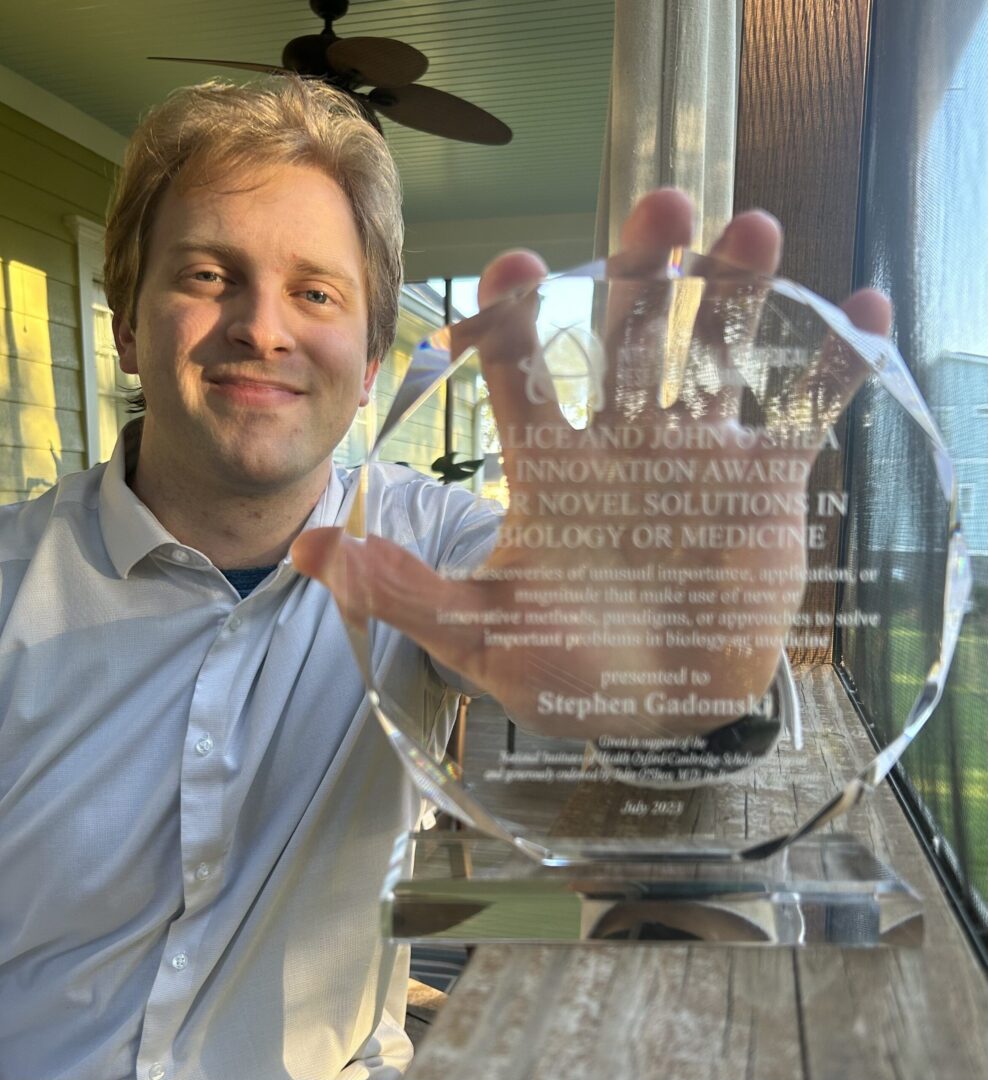
First awarded in 2016, the International Biomedical Research Alliance’s Innovation Award recognizes novel solutions in biology or medicine and acknowledges discoveries of unusual importance, application, or magnitude that make use of new or unusual methods, paradigms, or approaches to solve important problems in biology or medicine. This award has been endowed by Dr. John O’Shea, a member of the faculty co-founding team and long-time supporter of the NIH Oxford-Cambridge Scholars Program and presented by Dr. Irini Sereti.
Congratulations to the Class of 2019 NIH-Cambridge M.D./Ph.D. Scholar Dr. Stephen Gadomski on being named the 2023 recipient of The John and Alice O’Shea Innovation Award for Novel Solutions in Biology or Medicine. His mentors are Dr. Pam Robey at the National Institute of Dental and Craniofacial Research and Professors Simon Mendez and Andrew McCaskie at the University of Cambridge.
Stephen has made major advances in several areas by applying innovative and novel techniques to musculoskeletal tissues. Using these tools, he has contributed greatly not only to our basic understanding of skeletal tissue but has also provided new therapeutic approaches for the treatment of degenerative diseases. During his time at Cambridge, he made novel discoveries at the interface between the neural and skeletal systems that significantly advanced the scientific understanding of biological processes, and provided new and innovative approaches for the treatment of osteopenia and osteoporosis. Stephen was a recipient of an NIH FARE Award for this work.
Upon Stephen’s return to NIH, he made major advances in the Robey lab’s efforts to develop reliable methods to restore cartilage lost due to disease or trauma. These studies provided key mechanistic insights into cartilage biology, which can be applied to advance clinical therapies for degenerative joint diseases including Osteoarthritis. Based on this work, the NIH and Cambridge have supported the filing of a provisional patent application.
“It’s a great privilege to have the opportunity to work in a supportive, collaborative environment,” noted Stephen. “Finding novel solutions that can make a difference and advance medical therapies is a team effort. Dr. O’Shea and my mentors have sacrificed time and effort in founding and cultivating the NIH Oxford-Cambridge Program, as well as supporting my passion for science.” Stephen is currently finishing his medical degree at the Medical University of South Carolina with an aim to become a Principal Investigator in biomedical research.