The Lasker Lessons in Leadership lectureship series provide strategies for developing essential leadership skills to MD/PhD students, graduate students, and postdoctoral fellows. The series is a collaboration between the International Biomedical Research Alliance, the Albert and Mary Lasker Foundation and the National Institutes of Health NIH Oxford-Cambridge Scholars Program.
Craig Thompson, President and CEO of Memorial Sloan Kettering Cancer Center was the keynote speaker for the Lasker Lessons in Leadership event on March 31, 2016. His talk entitled “The Difference between Leadership and Management’ can be viewed below.
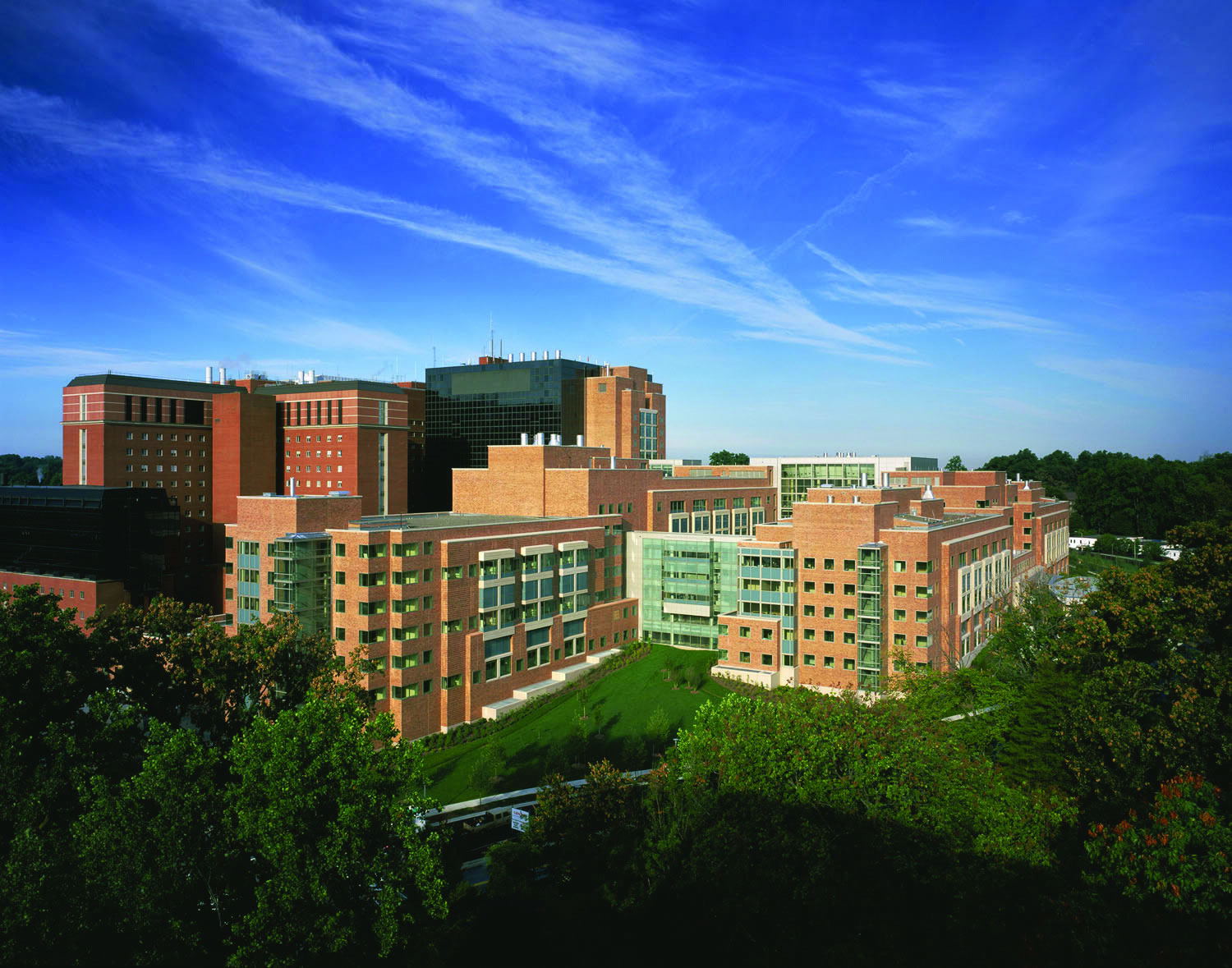
Distinguished young researchers seeking to pursue a PhD or MD/PhD arrived last week at the National Institutes of Health in Bethesda, Maryland for activities surrounding the Class of 2016 candidate interviews. These interviews, conducted by panelists of principal investigators from across various laboratories at the NIH, was the next stage in advancing toward an offer to earn a highly coveted seat in the Class of 2016 NIH Oxford-Cambridge Scholars Program and MD/PhD Global Doctoral Partnerships Program. The program is an accelerated, individualized, doctoral training program for outstanding science students committed to biomedical research careers.
The program is based on the British system, in which students perform doctoral research without required formal courses. Established at the NIH in 2000, the concept of NIH-U.K. partnerships was developed specifically to address some of the observed limitations of the American graduate education in biomedical sciences: excessive time to completion of a PhD (7.8 years per National Research Council studies); limitation of programs to a single university, department, or discipline; inadequate preparation for the global nature of contemporary science; and limited experience in collaborative research.
Chief among these problems is the length of time to completion in the traditional program, which, even at the best universities, has resulted in young scientists emerging to begin their independent research careers at the age of 35 or even later. The awareness of these limitations inspired the vision to develop a more efficient training experience, which incorporated global collaboration and interdisciplinary biomedical research. The Universities of Oxford and Cambridge were an obvious selection for partners, due to their outstanding biomedical science and clinical schools. With their participation, the vision evolved into a doctoral program that enables students to pursue collaborative thesis research with minimal course work and rotations and a completed PhD in an average of 4 years. In 2006, the program also established a platform for students to pursue a combined MD/PhD. The Rhodes Trust, Marshall Aid Commemoration Commission, Churchill, Gates, and Fulbright Scholarship programs have also contributed to individuals seeking their PhDs in biomedical research through this program.
Several of the events surrounding the candidate interviews were supported by the International Biomedical Research Alliance. The Alliance, established in 2005 as a unique public-private partnership, is comprised of a group of dedicated private citizens with the shared aim of training a new generation of top biomedical researchers who are better equipped to investigate human diseases and develop new preventions, treatments, and cures. Emergent BioSolutions, a pioneer in its support for the Scholars Program through the Alliance, generously sponsored the Class of 2016 Candidates’ Dinner on the evening of February 16, 2016. “Emergent BioSolutions is honored to be a longstanding partner of the Alliance and the NIH Oxford-Cambridge Program,” said Tracey Schmitt Lintott, Emergent’s SVP Global Public Affairs. “As a global biopharmaceutical company whose mission is to protect and enhance life, supporting our talented scholars and fueling their innovation and passion in biomedical research is an investment not only in their future, but also in the scientific workforce of tomorrow.”
Scholars chosen for the Class of 2016 will be notified prior to the end of February. Each scholar receives the equivalent of $300,000-$550,000 in funding. To learn more about the Scholars Program visit http://oxcam.gpp.nih.gov/.
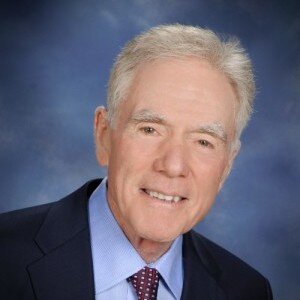
Often called “The Father of Personalized Medicine,” Dr. Ralph Snyderman, Chancellor Emeritus, Duke University, and James B. Duke Professor of Medicine in the Duke University School of Medicine and a member of the Alliance board directors was the recipient of the PMWC Pioneer Award at the 10th Personalized Medicine World Conference held in Silicon Valley, California, January 24 -27, 2016. The PMWC Pioneer Award is given on occasion to a rare individual who presaged the present day excitement regarding personalized medicine at a time when only less evolved technology and less encouragement by peers existed, but nevertheless made major advances in the field.
Dr. Snyderman has been a passionate supporter for personalized medicine that advocates for a predictive, proactive, preventive, and patient-participatory approaches. He has lectured extensively on this new model of care, sighting that converging technologies have allowed medical professionals the ability to predict events, determine risks for disease, track health, and enhance the well-being of their patients, thereby mitigating health risks.
PMWC International is dedicated to transforming healthcare through the global adoption of personalized medicine. Launched by Silicon Valley investors and entrepreneurs in 2009, PMWC International holds conferences in the U.S. and abroad to forge connections and drive innovation. You can learn more about PMWC 2016 at http://2016sv.pmwcintl.com/
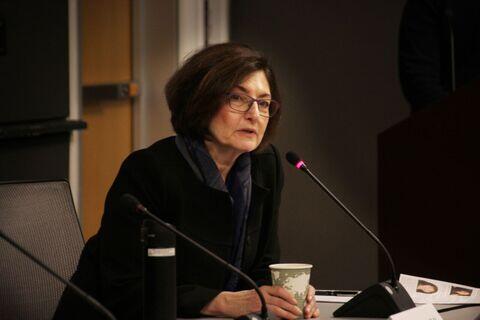
What does scientific leadership through communication look like? What advice would you give to young scientists in order to improve their communication skills with fellow researchers and the general public? What advice would you give specifically to female scientists to develop their leadership and communication skills in order to be heard? These are some of the difficult questions that Dean Linda Fried, MD, MPH, of Columbia University’s Mailman School of Public Health tackled on January 14, 2016. Dr. Fried served as the keynote speaker at the third Lasker Lessons in Leadership lecture held on the main campus of the National Institutes of Health (NIH) in Bethesda, Maryland.
Dr. Fried is a leader in the fields of epidemiology and geriatrics who has dedicated her lengthy career to the science of healthy aging and understanding the transition to a world where greater longevity benefits people of all ages. An internationally renowned scientist, she has done influential work in defining frailty as a medical condition, examining its causes, and educating society on the potential for prevention to maximize health for older adults. Under Fried’s leadership, the Mailman School continues to be a groundbreaking institution in transforming the health of populations and is one of the top five NIH-funded schools of public health.
Dean Fried opened her lecture in quoting renowned historian David McCullough: “We need leaders, and not just political leaders. We need leaders in every field, in every institution, in all kinds of situations. We need to be educating our young people to be leaders. And unfortunately, that’s fallen out of fashion.” Dr. Fried went on to articulated her three-point thesis on what leadership has looked like in her career as a scientist, clinician, and public health servant. She pointed out to the trainees that “leadership is developed at every single stage of what you do.” She impressed upon the trainees that communicating the importance of what you do, to all constituents, in an effective and meaningful way, whether orally or in written form, is the point at which science becomes leadership through communication. Dr. Fried closed her talk by stating that “the bridge between science and leadership is communication,” and that “leaders inspire and motivate to a vision, mission, and excellence that enables us to change the world for the better through what we do.”
Following Dr. Fried’s talk, a mentor panel, consisting of Dr. Fried; Dr. Michele Hogan, Executive Director of the American Association of Immunologists; Dr. Linda Huynh, Scientific Writer/Editor in the Public Communications Branch at the Eunice Kennedy Shriver National Institute of Child Health and Human Development, NIH; and Dr. Tom Wynn, Chief of the Immunopathogensis Section, Laboratory of Parasitic Disease at the NIAID and NIH Oxford-Cambridge Scholars Program director, held an interactive session, fielding questions from students present in the auditorium and via video cast for students attending remotely from the Universities of Oxford and Cambridge.
In the afternoon, students had the opportunity to view a short video on effective communication tips and participate in a small group interactive assignment answering the question: “How would you explain your science to your friend, a car salesman, whom you have not seen in twenty years?” Members of the mentor panel, Dr. Fried, and NIH leadership served as small group facilitators, giving the students a chance to have additional and more focused mentoring time.
The Lasker Lessons in Leadership program is a collaborative effort developed in 2015 by the International Biomedical Research Alliance, the Albert and Mary Lasker Foundation, and the NIH Oxford-Cambridge Scholars Program. The goal is to help the next generation of physicians and scientists develop the leadership skills necessary to advance scientific discovery. The lectureship series include a formal curriculum addressing eight distinct career-relevant leadership topics aimed at postgraduate medical research students. The program is also open to NIH graduate students on a limited basis and available for public viewing via the NIH video cast. The Lasker Lessons in Leadership series has been generously co-sponsored by WIRB-Copernicus Group (WCG), the world’s largest provider of regulatory and ethical solutions for clinical research, and Certara, a global biosimulation and regulatory writing company committed to optimizing drug development decisions.
The next Lasker Lessons in Leadership lecture will be held on March 31, 2016 on the main campus of the NIH in Bethesda, Maryland. The keynote speaker will be Dr. Craig Thompson, President and CEO of Memorial Sloan-Kettering Cancer Center in New York City, with mentor panel including/featuring Dr. John Niederhuber and Dr. Christina M. Annunziata.
For additional information regarding the Lasker Lessons in Leadership series, please contact Randi Balletta at [email protected].
A recent edition of the NIH National Cancer Institute Center for Cancer Research publication, CCR Connections, includes a significant article entitled “A Special Relationship.” In the article, current and former scholars in the NIH Oxford-Cambridge Scholars Program discuss this unique partnership program between the NIH and Oxford and Cambridge Universities. Read the full article here: http://home.ccr.cancer.gov/connections/…/Vol9_No1/news_7.asp