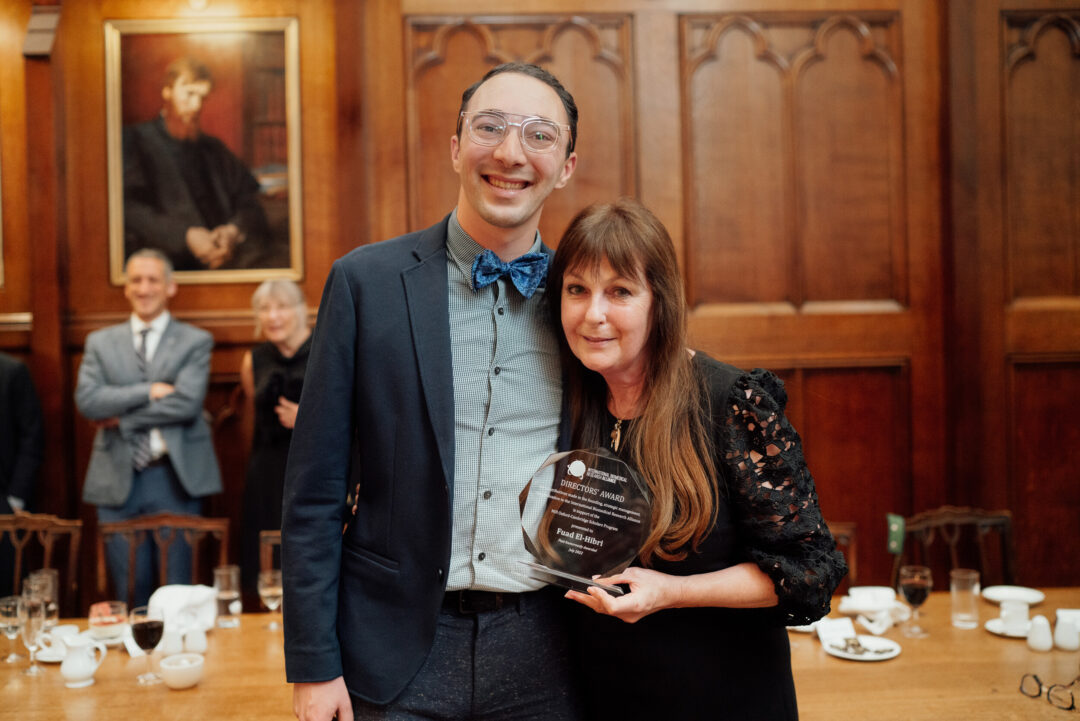
From time to time, individuals who have made extraordinary contributions to the NIH Oxford-Cambridge Scholars Program are singled out to receive special recognition with the “Director’s Award.” Honorees have been selected based on their dedication to the mission of cultivating the next generation of scientists and their selfless service to the Alliance and the Scholars Program.
The ceremony to honor the winners was held during the NIH Global Doctoral Partnerships Research Workshop, titled Global Team Science: Bridging Borders from Bench to Bedside at Keble College, the University of Oxford July 26-28, 2022.
The International Biomedical Research Alliance and NIH-Oxford-Cambridge Scholars Program, alongside the Scholars, bestowed the Director’s Award, posthumously, to Alliance Board Director Fuad El-Hibri, who, after a valiant fight with pancreatic cancer, left this world on April 23, 2022.
In 1998, Fuad founded what would become the publicly traded American multinational biopharmaceutical company Emergent Biosolutions. Fuad served as its Chief Executive Officer for 14 years and its Executive Chairman of the Board of Directors until his retirement in April of this year. His leadership was instrumental in growing the company’s portfolio to its current suite of marketed and procured products for a variety of public health threats, including medical countermeasures for anthrax, smallpox, botulism, and chemical warfare agents, as well as overseeing the company’s role in fighting the opioid crisis. Despite his failing health, he led the company in delivering over 120 million dose equivalents of the COVID-19 vaccine.
Fuad received many accolades for his business successes and philanthropic contributions, especially in protecting and enhancing the lives of millions around the world through life sciences innovation and combating public health threats. He was a recipient of the Vaccine Industry Excellence Award from the World Vaccine Congress. He served on the Board of Trustees of the U.S. Chamber of Commerce and the Yale Healthcare Conference Advisory Committee and had the honor of an annual prize (the Fuad El-Hibri ‘82 Entrepreneurial Award) for students established in his name at the Yale School of Management.
Fuad was a Founding member of the International Biomedical Research Alliance in 2005 and faithfully served on our Board of Directors for 17 years. He and his wife, Nancy, supported several laboratory scholarships for first-year OxCam students at the NIH and graciously hosted student gatherings at their home in Potomac, Maryland. As Chair of the Development & Finance Committee, he led the charge for the construction of affordable student housing close to the NIH campus in Bethesda. One of his final acts as an Alliance Director, just days before his passing, was to make a cornerstone contribution to the construction of a house in the new FAES building project.
Fuad, whose name means “heart” held himself and those around him to the highest level of integrity and excellence. Deeply grounded in faith, he brought people together and encouraged all to be their best in spreading good in this world.
Penelope Rose, his long-time colleague, and friend accepted this award on behalf of Mrs. Nancy El-Hibri and their family.
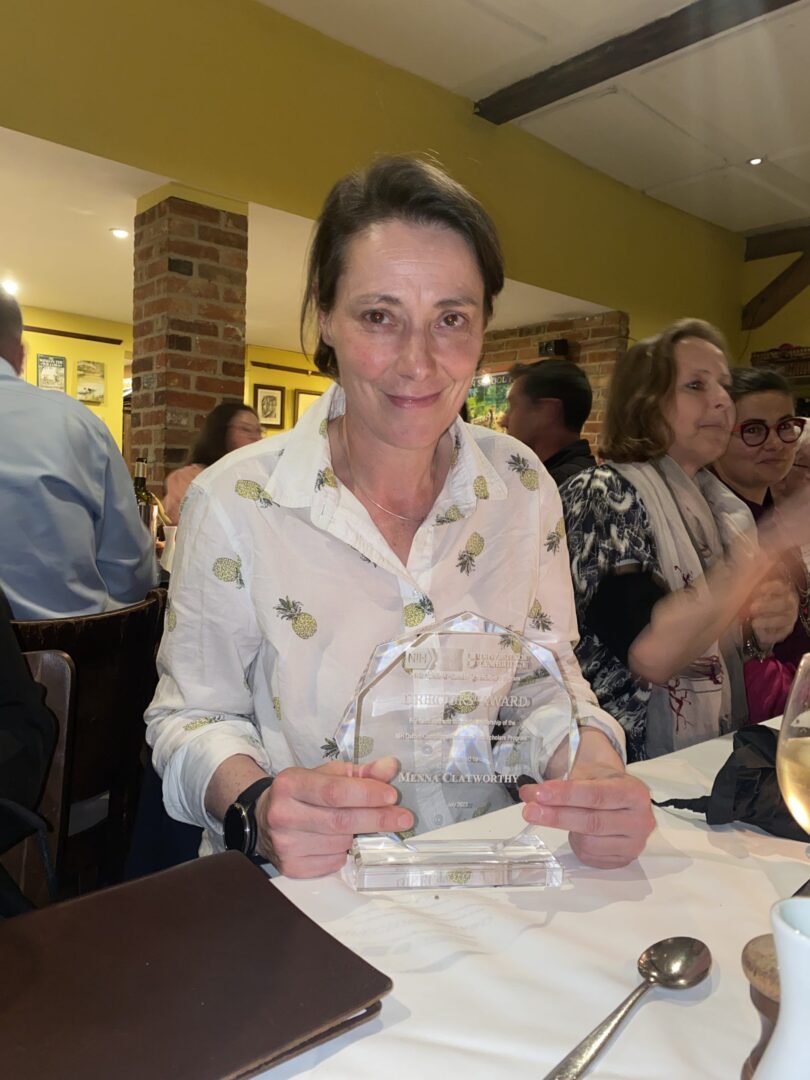
From time to time, individuals who have made extraordinary contributions to the NIH Oxford-Cambridge Scholars Program are singled out to receive special recognition with the “Director’s Award.” Honorees have been selected based on their dedication to the mission of cultivating the next generation of scientists and their selfless service to the International Biomedical Research Alliance and the NIH Oxford-Cambridge Scholars Program.
The ceremony to honor the winners was held during the NIH Global Doctoral Partnerships Research Workshop Gala Dinner celebrated at Keble College, at the University of Oxford.
Professor Menna Clatworthy was honored for her contributions as the longest-standing Director of the NIH Oxford-Cambridge Scholars Program at the University of Cambridge.
Dr. Clatworthy completed her professional training in nephrology and undertook a Ph.D. at the University of Cambridge, investigating the role of antibodies and Fcƴ receptors in autoimmunity and defense against infection.
She was awarded the British Renal Association Raine Award and the Medical Research Society Young Investigator Award for this work. She subsequently obtained a Wellcome Trust Intermediate Fellowship which included an 18-month post-doctoral post at the National Institutes of Health, in Dr. Ron Germain’s laboratory. This work focused on the use of two-photon intravital imaging to examine dynamic behavior of immune cells.
Dr. Clatworthy currently works as a University Lecturer in Transplantation Medicine and divides her time between research, teaching, and clinical practice in transplantation and nephrology. Her laboratory is based within the Department of Medicine wing of the new MRC Laboratory of Molecular Biology. Her group has determined how immune cells derived from the gut are able to defend the meninges lining the brain from microbial invasion and infection. And they have shown how a single molecule within the gut directs the immune response toward wound healing or bacterial defense. When unbalanced, the result can be inflammatory bowel disease.
A cellular immunologist and renal physician in the University’s Department of Medicine, Dr. Clatworthy studied immune cells in peripheral blood, nasal, and lung tissues during the Covid-19 pandemic to explore how the immune system responds to the SARS-CoV2 virus and how this might contribute to pathology. Her group contributed to a collaborative study in which 800,000 immune cells were analyzed to investigate how immune responses differ between asymptomatic cases and people with severe Covid-19. This work was recognized by the European Molecular Biology Organisation (EMBO) who named Dr. Clatworthy as one of their 2022 members.
Dr. Clatworthy has published more than 50 papers, including in journals such as Nature Medicine, Journal of Experimental Medicine, the New England Journal of Medicine, and Cell. Her clinical interests are in transplantation, in particular the effects of B cells and antibodies on the allograft and the use of novel immunosuppressants to target this axis. She has also authored or co-authored several educational textbooks in nephrology and transplantation. In addition to serving as the NIH Cambridge Director, Dr. Clatworthy has mentored several OxCam Scholars in her laboratory. In 2012, she received the NIH Oxford-Cambridge Scholars Program Outstanding Mentor Award.
The International Biomedical Research Alliance Distinguished Alumni Award recognizes achievements of an exceptional nature in scientific and medical inquiry, professional practice, and enhancing the lives of others both personally and professionally. This Award is not given in recognition of a single remarkable achievement but is reserved for an NIH-OxCam alumnus who has attained and maintained extraordinary impact throughout their career in their chosen fields of endeavor and in their service to society at large. The ceremony to honor the 2022 winner was held during the NIH Global Doctoral Partnerships Research Workshop Gala Dinner in Keble College, at the University of Oxford on the evening of July 28, 2022.
It was a distinct honor to have the 2021 Distinguished Alumni Award recipient, Dr. Paul Tesar, nominate the 2022 award recipient. Dr. Tesar made the following sentiments. “It is with my highest level of respect and admiration that I submit this nomination for Dr. Justin Lathia to be considered for the Distinguished Alumni Award. In short, Dr. Lathia is a dynamo and a star among stars. Since completing his Ph.D., he has published over 210 research papers which, combined, have been cited over 20,000 times. Dr. Lathia has already garnered an impressive $20 million in research funding to support his innovative studies including a recent highly prestigious R35 grant from NINDS/NIH. Since starting as a new faculty member in 2012, Dr. Lathia has quickly risen through the ranks at Cleveland Clinic where he now has many leadership positions including Department Vice Chair, Scientific Director of the Brain Tumor Center, co-leader of the Case Comprehensive Cancer Center Molecular Oncology Program, and Director of Faculty Development. Dr. Lathia has also been honored with a prestigious Endowed Chair, the Melvin H. Burkhardt Endowed Chair for Neuro-Oncology.
Impact is generated through groundbreaking discoveries, inspirational mentoring, or leadership of large initiatives. Few excel in even one of these areas but almost none excel in all. Dr. Lathia is among this rarified group. He is an internationally accomplished scientist whose discoveries have already translated to the clinical care of patients. He has built and led large programs to advance understanding of brain cancer. Most importantly, he is an exceptional mentor leading the next generation of scientists. Dr. Lathia and his team are reshaping the brain tumor field. In particular, Dr. Lathia has made major advances to understand and treat the most lethal brain cancer, glioblastoma. The lab has identified a specialized cell type found in glioblastoma tumors that helps them evade the immune system to enhance progression. Remarkably, Dr. Lathia showed that these cells exhibit sex-specific variation and underlie critical differences in how male and female glioblastoma patients respond to treatments. This work has garnered him international recognition and led directly to two current clinical trials.”
“We are truly honored to receive this recognition. This reflects our laboratory’s progress in understanding the complexities of malignant brain tumors and the creativity and drive of our laboratory members. I am grateful to the International Biomedical Research Alliance for all their support, starting from when I was a PhD student and their commitment to supporting an exceptional training program for the next generation of scientists,” remarked Dr. Lathia.
Dr. Lathia was appointed to the Board of Directors of the International Biomedical Research Alliance as an Alumni Director in June.
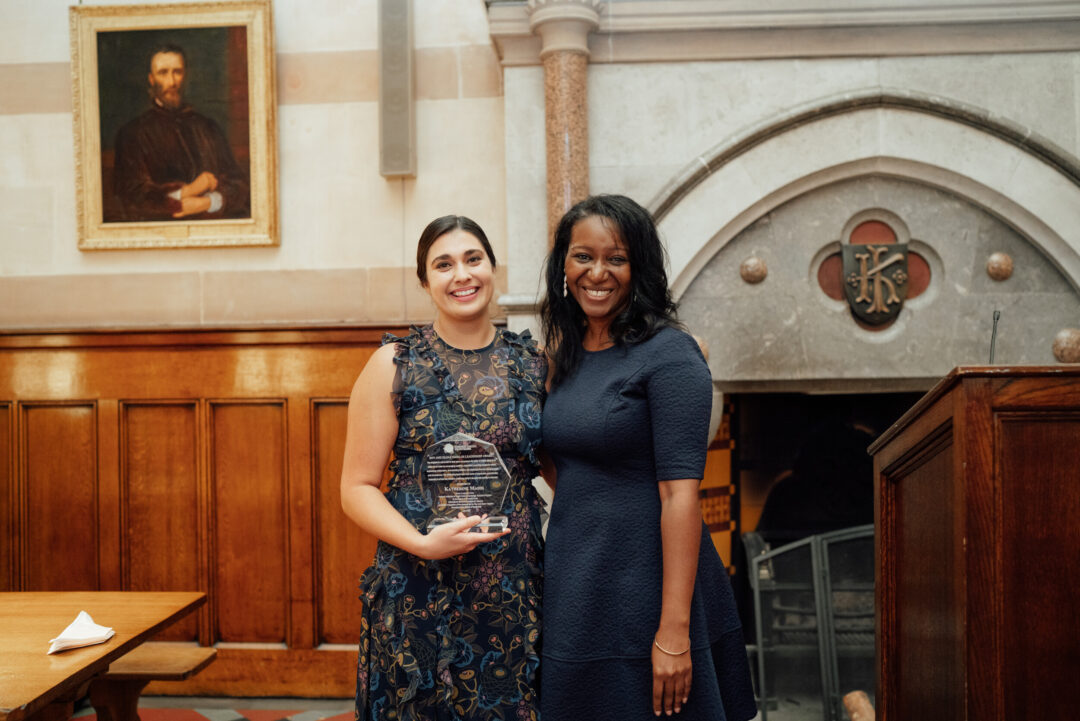
The recipient of the Roy and Diana Vagelos Leadership Award is a role model for their peers and possesses the ability to inspire others to be better and do better by encouraging creativity, cooperation, promoting respect for others, emphasizing collaboration, demonstrating initiative, and adapting to new and changing needs and circumstances. This outstanding leader has a keen sense of organization and embodies leadership in all that they endeavor, combining clarity in thought with humility of character. Scholars in the NIH Oxford-Cambridge/Wellcome Trust Scholars Program who demonstrate exceptional leadership are nominated by their peers making this award a particularly special honor to receive. The ceremony to announce the winner was held during the NIH Global Doctoral Partnerships Research Workshop, titled Global Team Science: Bridging Borders from Bench to Bedside at Keble College, the University of Oxford July 26-28, 2022.
This year, the inaugural Roy and Diana Vagelos Leadership Award was bestowed upon Katherine Masih. Katherine Masih is an NIH-Cambridge MD/PhD Scholar in the Class of 2019. Her mentors are Dr. Javed Khan at the National Cancer Institute and Prof. Richard Gilbertson at the University of Cambridge. She is a medical student at the University of Miami Leonard M. Miller School of Medicine. Katherine was nominated for this award by three of her peers. One nominator wrote “Katherine has done a wonderful job as a student leader. She demonstrates the utmost professionalism in how she handles situations and in how she communicates, and she is also very kind and welcoming to all students. She creates a strong sense of community in the program.” Katherine served as the Chair of the Student Leadership Board from 2021-2022, Vice Chair from 2020-2021, and Logistics Director for the Workshop Committee from 2019-2020. She has worked with her peers and the Scholars Program administration and faculty to advance several important initiatives including MD/PhD communication with medical schools, creating an alumni professional mentorship program, serving as an editor of the student handbook, and the reorganization of the Student Leadership Board. Katherine’s research accomplishments are in parallel with her exceptional leadership qualities. In 2021, Katherine was recognized with the Translational Science Award endowed by Dr. Richard and Vera Siegel. This award recognizes advances in the field of medical science that move fundamental discoveries from bench to bedside. Katherine’s work uncovered a novel epigenetic signature that has the potential to be used as a clinical pre-treatment biomarker to predict response to CD19-targeting CAR T-cells in children with leukemia.
The International Biomedical Research Alliance was pleased to share the announcement of the renaming of this award to honor Alliance Emeritus Director Roy Vagelos and his wife, Diana, for their combined accomplishments as visionary leaders in education, science, and industry. Dr. Vagelos’ contributions to biomedical research have transpired over the course of a wide-ranging career where he excelled as an NIH researcher, Chair of Washington University’s Biological Chemistry Department, and Chair and CEO of Merck & Co., – a company recognized as America’s most admired under his leadership. He is currently the Chair of the Board of Directors of Regeneron Pharmaceuticals and an Emeritus Director of the International Biomedical Research Alliance.
Diana, a force for good in her own right, is an accomplished philanthropist and community leader. She has worked as a catalyst for improvement in the areas of scholarships, financial aid, the arts, and facilities improvement in higher education. She serves as Vice Chair of the Board of Trustees of Barnard College. While they are unable to be on hand at the Gala Dinner for the announcement of the award renamed in their honor, they were humbled to have this award re-named in their honor. Dr. Vagelos commented: “I have tried to help capable people who demonstrate special talents throughout my career. Diana has done similar things since the time she was in high school. We are honored and delighted to be associated with this award.”
Katherine said, “I was incredibly surprised and honored to have been selected for the inaugural Roy and Diana Vagelos Leadership Award. The OxCam Program has gone through significant change and growth during my tenure, and I am grateful to the faculty for being so receptive to and implementing new programs and changes presented by scholars. The progress we’ve accomplished would not be possible without the other brilliant, dedicated, and enthusiastic student leaders I’ve had the pleasure of working with and learning from over the past three years. Thank you to Dr. and Mrs. Vagelos, the OxCam Program, the Alliance, my mentors, Javed and Richard, and fellow scholars for the unwavering support and this honor.”
Katherine is currently writing up her thesis work aimed at understanding interactions between tumors and immune cells in childhood malignancies. After graduating from Cambridge in Spring 2023, she will return to Miami for her final year of medical school and will apply to residencies in pediatrics. She aspires to be a physician-scientist specializing in pediatric oncology, using multi-omic approaches to gain insight into the mechanisms driving these tumors in the laboratory and to translate these discoveries into novel therapeutic strategies for children with cancer.
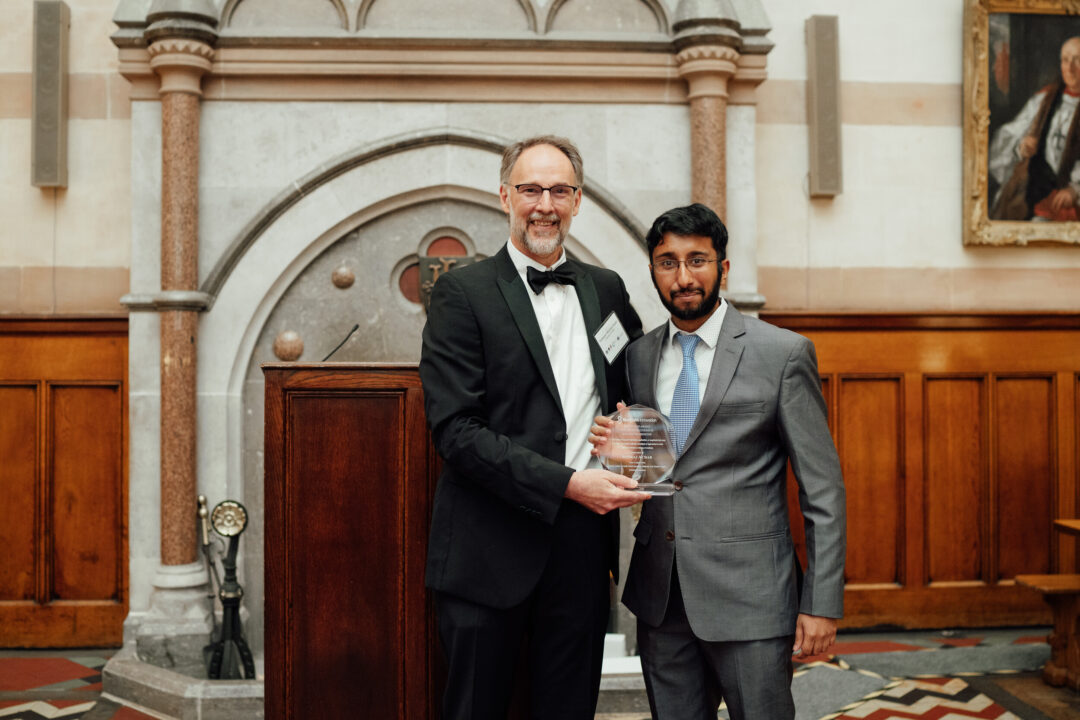
First awarded in 2016, the International Biomedical Research Alliance’s Innovation Award recognizes novel solutions in biology or medicine and acknowledges discoveries of unusual importance, application, or magnitude that make use of new or unusual methods, paradigms, or approaches to solve important problems in biology or medicine. Once again, this year, the Innovation Award was generously sponsored by BioHealth Innovation Inc. This award was presented to Sooraj Achar, an NIH-Oxford D.Phil. Scholar in the Class of 2020 who is mentored by Dr. Gregoire Altan-Bonnet at the National Cancer Institute (NCI/NIH) and Prof. Mike Dustin at the University of Oxford.
Sooraj combined robotic sampling of mouse and human T cell responses over time with machine learning and modeling to gain insights into how T cells process information derived from the particular antigens to which they are exposed. The analysis showed that patterns of cytokine release carried information about the type of antigen encountered and distinguished six distinct cellular responses rather than the three types usually recognized. The universality of the model should prove useful for quantifying and fine-tuning the strength of antigens for immunotherapies and vaccine development. Thus, robotic platforms combined with machine learning and mathematical modeling provide quantitative tools with which to study high-dimensional biological dynamics and may help to optimize therapeutic strategies. Such understanding is likely to enhance strategies for immunotherapies that rely on altered and designed T cell responses.
This work was published in Science on May 19th, 2022, with Sooraj as the first author. “This study showed how we can use robotics and high dimensional data analysis to reverse engineer how T cells respond to a single type of antigen. I am now examining how a type of T cell used in immunotherapy, named a CAR-T cell, responds when interacting with multiple types of antigen simultaneously, first at a functional level at the NIH, then from a mechanistic level at Oxford. We hope to be able to use the insights we gain from these projects to design more targeted forms of CAR-T based immunotherapy,” remarked Sooraj.
About BioHealth Innovation, Inc.
BioHealth Innovation, Inc., is a regional innovation intermediary which supports the transformation of research projects into new business opportunities in partnership with the region’s rich assets, institutions, and entrepreneurial community. BHI achieves this goal by being a catalytic partner in the economic development ecosystem. Learn more at www.biohealthinnovation.org.